
A Strata Committee's Guide to Building Defect Reports

Sooner or later, most strata committees in Sydney face the same moment. A leak keeps coming back, cracks appear where they shouldn't, an owner complains about mould, or the building is approaching the end of its warranty period and someone asks the obvious question: is anything actually wrong here, and who is responsible for fixing it? The tool that answers that question is a building defect report.
For a committee that has never commissioned one, the whole thing can feel opaque. What is a defect report exactly? Do we need the government scheme or our own consultant? What should it contain? Will it hold up if we end up in a dispute? Who pays? This guide answers those questions in plain English, so your owners corporation can commission the right report, at the right time, for the right reasons.
This guide is general information about building defect reports in NSW. It is not legal advice, and for decisions about claims, warranties or disputes you should consult a construction lawyer.
What a building defect report actually is
A building defect report is an independent, documented assessment of what is defective in a building, why, how bad it is, and what it will take to put right. It is prepared by a suitably qualified building consultant or engineer, and its value lies in being objective and evidence-based: it does not guess, and it does not take the builder's or anyone else's word for it.
A good report does more than list problems. It identifies each defect, diagnoses the underlying cause rather than just the symptom, establishes the extent of the damage, references the relevant standards or the National Construction Code where a defect breaches them, and sets out how the defect should be rectified. Crucially, it records all of this with photographic and, where needed, test evidence, so the findings can stand up to scrutiny from a developer, an insurer, a tribunal or a court.
That evidentiary quality is the whole point. A building defect report is the factual foundation an owners corporation uses to make decisions, to hold a builder or developer accountable, and to resolve disagreements about responsibility on the basis of evidence rather than argument.
Why an owners corporation needs one
Committees commission defect reports for a handful of recurring reasons, and often more than one applies at once:
To decide on a repair properly. Before spending owners' money on remediation, a report confirms what is actually failing and why, so the money fixes the cause rather than the symptom.
To support a claim. Where a builder or developer is responsible for defective work, a report is the evidence that substantiates a claim within the applicable warranty or statutory time limits.
To resolve a dispute. When owners, the committee, a builder or an insurer disagree about what is wrong and who should pay, an independent report gives everyone a shared, factual basis to work from.
For an insurance claim. Insurers require documented evidence of a defect and its cause before considering a claim.
Before a warranty period closes. A building approaching the end of its defects or warranty window should be assessed while claims are still possible, not after.
For due diligence. Committees and prospective buyers use reports to understand a building's true condition before making decisions.
The two kinds of defect report you'll encounter in NSW
This is where many committees get confused, because there are really two different things that both get called a "defect report."
1. The statutory report under the building bond scheme (new buildings)
If your building is a new residential or mixed-use strata building of four or more storeys, it is likely covered by the Strata Building Bond and Inspections Scheme (SBBIS), a NSW scheme overseen by Building Commission NSW. Under it, the developer must lodge a building bond, set at 2% of the building contract price (with an increase to 3% phasing in for the newest developments from 1 July 2026), before the occupation certificate is issued. That bond is security to pay for rectifying defects if the developer does not.
The scheme runs to a set timetable, and it produces its own defect reports:
The developer appoints an independent building inspector, drawn from an approved strata inspector panel and with no connection to the developer, within 12 months of the occupation certificate.
The inspector carries out an interim inspection and report between 15 and 18 months after the work is completed, identifying defective building work.
The developer is expected to rectify those defects, roughly between 18 and 21 months.
The inspector then carries out a final inspection and report between 21 and 24 months, recording what has and has not been fixed.
If defects remain unrectified, the bond can be drawn on to fund the owners corporation's rectification. If there are none, the bond is returned to the developer.
The whole process usually runs its course within two to three years. It is largely automatic and developer-funded, which is a genuine protection, but it is also time-limited and specific in scope. Buildings of three storeys and under are not in this scheme; they are generally covered instead by the Home Building Compensation Fund. Committees of newer buildings should know exactly where they sit in this timeline, because the windows to identify and pursue defects do not stay open.
2. The independent report your owners corporation commissions
The second kind is the report an owners corporation arranges itself, on its own terms, at any time. This is the flexible and, for most committees, the more important one. It is not tied to the bond scheme's timetable or storey thresholds, and it can be scoped to whatever the building actually needs: a single persistent leak, a whole-of-building condition assessment, a facade, or a specific dispute.
An independent report is what a committee turns to when it needs to understand a problem, decide on remediation, support a warranty or statutory claim, back an insurance claim, or arm itself for a dispute. Because it is commissioned by and for the owners corporation, it answers the committee's questions directly, and a well-prepared one is built from the outset to withstand challenge if the matter escalates. This is the report Assentra prepares for owners corporations.
What a good building defect report contains
Not all reports are equal, and a committee paying for one should know what good looks like. A thorough building defect report should include:
A clear identification of each defect, described plainly and located precisely within the building.
A diagnosis of the cause, not just the visible symptom, because the cause is what determines the correct repair and who is responsible.
The extent and severity of each defect, including what is hidden behind the visible damage.
Photographic and test evidence documenting the findings.
The compliance basis, referencing the relevant Australian Standards or the National Construction Code where a defect represents a breach.
A risk or priority rating, so the committee knows what is urgent and what can be staged.
Recommended rectification, setting out how each defect should properly be fixed, often with an indicative cost or scope to inform budgeting.
A report that lists symptoms without diagnosing causes, or that asserts findings without evidence, is of little use when it matters. The difference between a tidy-looking document and a genuinely useful one shows up the moment it is tested by a developer's lawyer or an insurer.
How a defect report is produced
Producing a defensible report is an investigative process, not a walk-through. It typically combines a methodical visual inspection with diagnostic techniques that confirm causes rather than assume them, such as moisture mapping and thermal imaging to trace water, and, where necessary, limited invasive investigation to inspect what sits behind finishes, along with materials testing of concrete, membranes and seals. You can read more about how the underlying problems are traced in our guides to water ingress and concrete cancer, and about the diagnostic tools involved on our building diagnostics page.
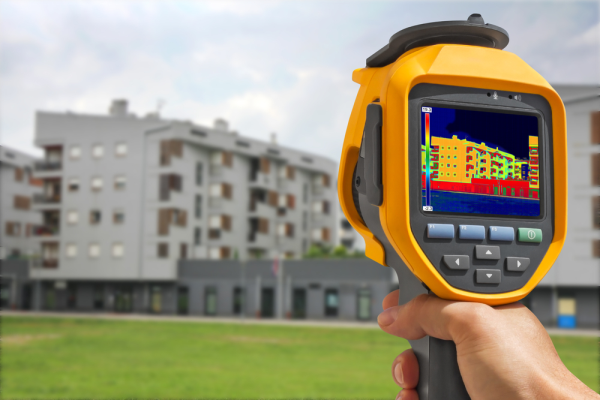
The output pulls all of that evidence together into a single, structured document that a committee, an insurer or a legal adviser can rely on.
The legal backdrop: why timing matters
A building defect report is often the first step toward holding someone accountable, and in NSW there are time limits that make acting early important.
Residential building work in NSW carries statutory warranties under the Home Building Act, generally six years for major defects and two years for other defects, running from completion of the work. Separately, the Design and Building Practitioners Act imposes a statutory duty of care on those who carry out construction work, owed to owners including owners corporations, to avoid causing economic loss from defective work. Together these give owners corporations real avenues to recover the cost of defects, but they operate within limitation periods, and a claim is far stronger when it is supported by a timely, well-documented defect report.
The practical takeaway is simple: if you suspect defects, get them documented while your options are still open. A report commissioned after a warranty window has closed is worth far less than the same report commissioned before. For anything approaching a claim or dispute, a construction lawyer should be involved alongside the report.
When to commission a building defect report
It is worth commissioning a report when:
A defect, leak, crack or mould keeps recurring despite repairs.
Your building is approaching the end of its warranty or defects period and you want issues documented before it closes.
You are a newer building moving through the building bond scheme timeline and want to be sure defects are properly captured.
You are about to spend significant money on remediation and want the cause confirmed and the scope defined first.
There is a dispute with a builder, developer, insurer or between owners about what is wrong and who pays.
You are preparing or reviewing a capital works plan and need the building's real condition assessed, which ties directly into capital works planning.
The earlier a defect is properly documented, the more options a committee keeps open, and the less a problem costs to resolve.
Frequently asked questions
What is a building defect report? It is an independent, evidence-based assessment of a building's defects, prepared by a qualified consultant or engineer. It identifies each defect, diagnoses its cause, establishes its extent, and recommends how it should be rectified, documented with photographic and test evidence so it stands up to scrutiny.
Who pays for a building defect report? It depends on the type. Under the NSW building bond scheme, the developer funds the independent inspector's reports for new buildings of four or more storeys. An independent report that an owners corporation commissions itself is paid for by the owners corporation, though that cost is often recoverable as part of a successful claim.
What is the difference between the building bond scheme report and an independent report? The building bond scheme (SBBIS) report is a statutory, developer-funded inspection on a fixed timetable for new buildings four storeys and above. An independent report is one the owners corporation commissions on its own terms, at any time, for any building, scoped to whatever it needs, whether remediation, a claim, an insurance matter or a dispute.
How long do we have to claim for building defects in NSW? Statutory warranties under the Home Building Act generally run six years for major defects and two years for others from completion, and other time limits can apply, including under the Design and Building Practitioners Act. Because the rules are specific and time-sensitive, get defects documented early and seek legal advice on your particular situation.
Will the report stand up in a dispute or at NCAT? A well-prepared report is built to. That means clear identification of defects, diagnosis of causes, evidence for every finding, reference to the relevant standards, and recommended rectification. A report that lists symptoms without evidence or causation is far weaker if challenged.
How long does a building defect report take? It depends on the size of the building and the scope, from a focused report on a single issue to a full condition assessment. A consultant can give you a timeframe once the scope is clear, and urgent matters can usually be prioritised.
Get a defect report your committee can rely on
A building defect report is only as valuable as it is rigorous. A tidy document that lists symptoms will not protect an owners corporation when a developer pushes back or an insurer asks for proof, whereas a properly investigated, evidence-based report gives your committee the confidence to make decisions and the standing to hold the right party accountable.
Assentra is a registered building consultancy and remedial engineering practice, and preparing clear, defensible building defect reports for owners corporations across Sydney and NSW is core to what we do. Learn more about our building defect reports or get in touch to discuss an inspection so your committee knows exactly what it is dealing with, and what to do next.