
Combustible Cladding: Where NSW Building Owners Stand Now
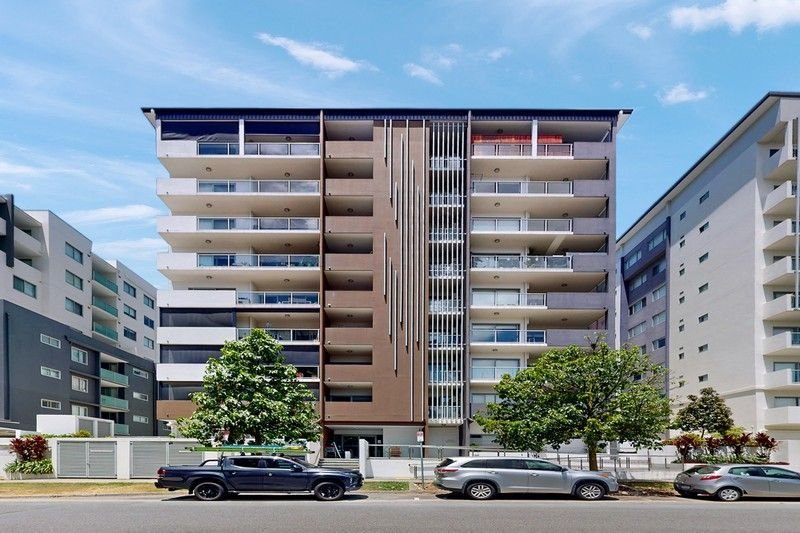
Combustible cladding has been the most closely watched building safety issue in Australia for the better part of a decade, and if you own or manage an apartment building in NSW you have probably heard a confusing mix of things about it. That the government is paying to fix it. That your building has to be recladded. That nothing has to happen unless someone tells you. None of those are quite right, and the picture has changed enough in recent years that advice written even two or three years ago can send an owners corporation in the wrong direction.
Here is the most important thing to know in 2026. The NSW Government's cladding remediation program, Project Remediate, has closed to new registrations. If your building is not already in it, that funding pathway is not available to you. At the same time, the obligations that sit on building owners have not gone anywhere, and neither has the risk. That combination is exactly why this is worth understanding properly.
This guide sets out what combustible cladding actually is, where the NSW regulatory position stands now, what you are genuinely required to do, what a combustible cladding assessment involves, and how owners are funding remediation now that the government program is shut to newcomers.
This guide is general information about combustible cladding regulation in NSW. It is not legal advice, and because cladding obligations turn on your specific building, its classification and its history, you should seek advice from a construction lawyer and a qualified fire safety or facade professional for your particular situation.
What combustible cladding actually is
Cladding is the material fixed to the outside of a building to form or cover its external walls. Most cladding is perfectly safe. The problem is a specific group of products that burn readily and can carry fire up the face of a building far faster than the building's fire safety systems were designed to cope with.
The material at the centre of the issue is the aluminium composite panel, usually shortened to ACP. An ACP is two thin sheets of aluminium bonded either side of a core. Where that core is largely polyethylene, which is a plastic, the panel becomes a fuel source running the full height of the facade. The aluminium skins look and behave like metal, which is part of why the risk was so widely missed.
ACPs are not the only concern. Assessments in NSW also look at:
Metal composite panels more broadly, including products with aluminium, zinc or copper outer layers over a core material.
Expanded polystyrene (EPS) render systems, where a foam insulation board sits behind a thin render coat.
Other insulated cladding systems, including those using polyurethane and polyisocyanurate.
It is worth being clear about something that causes a lot of unnecessary alarm. The presence of a composite panel on a building does not automatically mean the building is non compliant or dangerous. What matters is the specific product, its core composition, how much of the facade it covers, where it sits, how it was installed, and what other fire safety measures the building has. That combination is what an assessment is for, and it is why guessing from the footpath is not good enough in either direction.
Why it became such a serious issue
The concern is not theoretical. It was driven by a series of real fires that behaved in ways regulators did not expect.
The 2014 Lacrosse tower fire in Melbourne, the 2017 Grenfell Tower fire in London in which 72 people died, and the 2019 Neo200 fire, also in Melbourne, all demonstrated the same thing: combustible facade material can spread fire vertically across multiple storeys within minutes, defeating the compartmentation that tall building fire safety depends on.
Those events triggered audits across Australia. In NSW, the Cladding Taskforce was established in 2017 and worked through more than one hundred and eighty five thousand building records, inspecting thousands of buildings to identify those carrying combustible cladding and assess the risk each one presented.
For building owners, the consequences have gone well beyond fire risk itself. Buildings identified with combustible cladding have faced steep insurance premium increases or difficulty getting cover at all, reduced property values and stalled sales, mortgage and lending complications, and in some cases remediation bills in the millions across a scheme.
Where NSW stands now
This is the part that has moved, and where a lot of outdated advice is still circulating.
The product ban applies going forward, not backwards
Under the Building Products (Safety) Act 2017, the NSW Commissioner for Fair Trading issued a building product use ban that took effect on 15 August 2018. It prohibits the use of ACPs with a core of more than 30 per cent polyethylene by mass in any external cladding, external wall, external insulation, facade or rendered finish on certain building types, broadly Class 2, 3 and 9 buildings from two or three storeys up and Class 5, 6, 7 and 8 buildings from three or four storeys up, depending on the type of construction. The penalties are substantial, running to over a million dollars for corporations. The ban remains in force indefinitely unless revoked.
The critical point for existing buildings is this. The ban is about future use. It does not, by itself, automatically require an existing building to strip off cladding that was installed before the ban came into force. Owners sometimes read the ban and conclude they are already in breach, which is generally not the case.
What can compel action is a notice or order. The Commissioner can issue an affected building notice to owners, occupiers and the local council where a banned product is present. Councils and Fire and Rescue NSW have powers to require owners to address unsafe conditions, including fire safety orders that can mandate rectification within set timeframes. So the practical position is that existing buildings are not automatically caught by the ban, but they are squarely within reach of the regulator.
Registration is a genuine legal obligation
Separately from the ban, owners of certain buildings with external combustible cladding are required to register the building with the NSW Government through the cladding registration portal. This obligation sits under the Environmental Planning and Assessment Regulation and applies across a range of building types, including multi storey residential apartment buildings, hotels, aged care facilities, hospitals and buildings used by the public.
Registration is triggered where a building has external cladding of the relevant kinds, including metal composite panels and insulated cladding systems of the sort described above. In strata, a strata managing agent can complete the registration on behalf of the owners corporation.
If you are unsure whether your building is registered, that is worth checking rather than assuming. It is one of the few hard, black and white duties in this area.
Project Remediate is closed to new registrations
Project Remediate was announced in late 2020 as the NSW Government's response for existing buildings. It offered eligible owners corporations of Class 2 residential apartment buildings, including mixed use buildings, a coordinated remediation program with interest free loans, with government meeting the interest costs, a managing contractor running the works, and a technical framework including a cladding product safety panel and a pattern book of approved design details. It targeted roughly two hundred and twenty five high risk buildings identified by the Cladding Taskforce.
Two things have happened since.
First, registrations have now closed. Enquiries go to the Office of Project Remediate, but the program is not taking new buildings. For any owners corporation discovering a cladding problem today, this is the single most consequential fact in this guide, because it means remediation is now a matter the scheme funds and manages itself.
Second, the program has taken far longer than planned. Originally a three year initiative intended to run to late 2024, it has been extended to 2027. Of the buildings that expressed initial interest, a large number chose to manage their own remediation outside the program, and a majority of those that stayed in had still not completed recladding as of recent reporting. Cladding remediation has proven slower and more complex everywhere, for reasons that are instructive if you are about to start: replacement materials have to be verified non combustible to the relevant Australian Standard, qualified facade installers are in limited supply across both remediation and new build work, and owners corporations do not always make decisions quickly.
The long tail of lower risk buildings
The NSW Auditor General has noted that buildings initially assessed as lower risk may still warrant further action, and that tracking buildings from identification through to completed remediation has been difficult. The practical implication for owners is that being categorised as lower risk, or never having heard from the Taskforce at all, is not the same as being cleared. It means nobody has yet told you otherwise.
What you are actually required to do
Pulling the threads together, here is where the duties genuinely sit for a NSW building owner or owners corporation.
Register the building if it has external combustible cladding of the kinds captured by the registration requirement.
Keep fire safety measures current, including the annual fire safety statement, and have external wall construction assessed by a fire safety professional where it forms part of the building's essential fire safety measures.
Comply with any affected building notice, fire safety order or council direction you receive. These are enforceable and time bound.
Meet the general duty to maintain common property. In strata, the owners corporation must keep common property in a state of good and serviceable repair. The facade is common property, and a known combustible cladding risk sits inside that duty whether or not an order has been issued.
Disclose what you know. Cladding status affects sales, insurance and lending, and prospective purchasers and insurers will ask.
Plan and fund for it. Where remediation is likely, it belongs in the ten year capital works plan rather than arriving as an unbudgeted emergency, which is covered in our capital works fund guide.
Note also that external cladding likely to threaten life safety in a fire has been designated a major defect under the Home Building Regulation, which matters because major defects carry a six year statutory warranty period. For newer buildings that can open a recovery pathway against the builder or developer, and our guide to building defect reports explains how that evidence is assembled.
What a combustible cladding assessment involves
A proper combustible cladding assessment answers three questions in order: what is actually on the building, what risk does it present, and what should be done about it.
Identifying the material comes first, and it cannot be done reliably by eye. It combines a review of original drawings, specifications, product data and any certification or test evidence with close range inspection of the facade, and usually the removal of a small sample so the core can be examined and the product identified. Where documentation is missing, which is common, laboratory testing establishes the core composition. Verification of replacement or existing material as non combustible is assessed against the relevant Australian Standard for combustibility testing.
Assessing the risk then looks at the whole building rather than the panel alone: how much of the facade is affected and where, the geometry and whether the arrangement creates paths for vertical fire spread, the proximity of the cladding to windows, balconies, escape routes and boundaries, the building's other fire safety measures such as sprinklers, alarms and compartmentation, and the occupancy and evacuation profile. This is where fire engineering input sits alongside facade expertise.
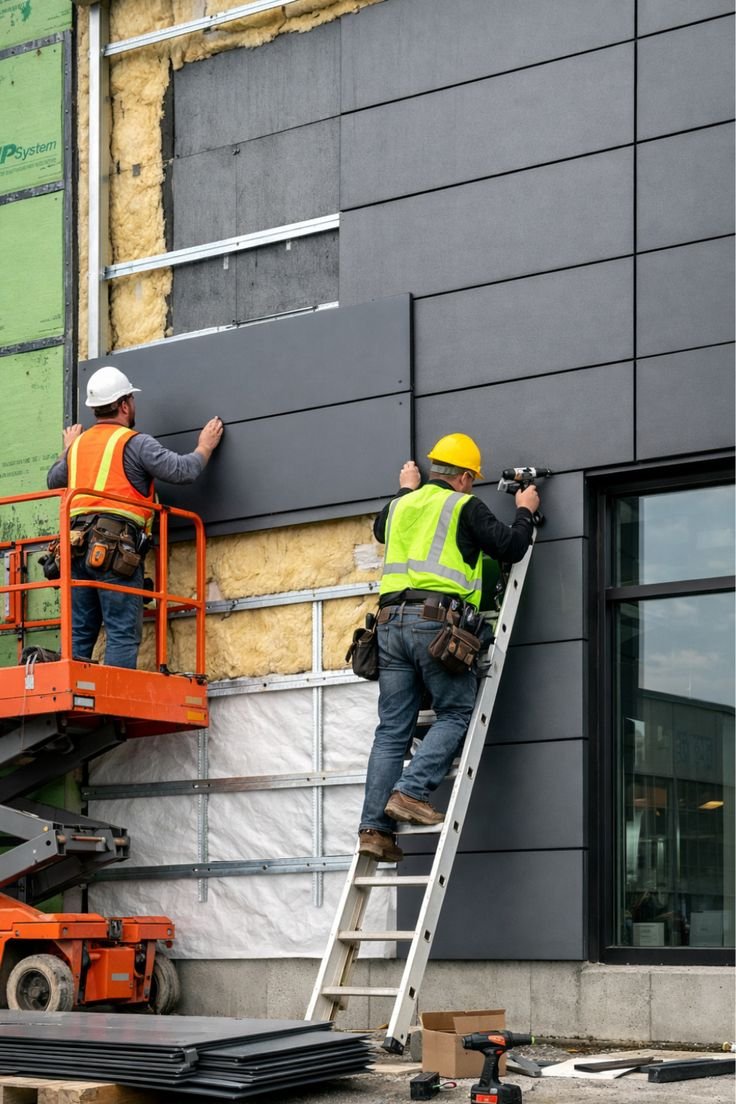
Determining the response produces the deliverable that matters: a documented report identifying the material with evidence, an assessed risk rating, and recommended action ranging from no further work required, through interim risk measures, to a staged or full replacement scope, along with indicative cost and programme so the owners corporation can budget and make a decision.
Because the assessment often uncovers other facade problems at the same time, and because access has already been arranged, it is frequently sensible to combine it with a broader facade condition assessment. Cladding rarely fails in isolation from the sealants, junctions and water ingress issues around it, and our guide to facade inspections in NSW covers that wider picture.
If your building has combustible cladding
The instinct is often either to panic or to wait. Neither serves owners well. A measured sequence looks like this.
Establish the facts first through a proper assessment, because the range of outcomes is genuinely wide and many buildings need less than owners fear. Confirm your registration status. Make sure fire safety measures are current and, where risk is identified, put interim measures in place while longer term decisions are made. Get a defined remediation scope prepared by a suitably registered practitioner rather than going straight to contractor quotes, because without a scope you cannot compare prices or be confident the work will comply. Investigate recovery, since for newer buildings the cost may be recoverable from the builder or developer, and for some schemes there are insurance or litigation avenues worth taking legal advice on. Then fund it deliberately, through the capital works fund, a special levy, or a commercial loan, with the works staged if that suits the scheme's finances.
The one approach that reliably costs more is waiting for an order to arrive and then reacting under a deadline, with no scope, no budget and no leverage.
Funding remediation now
With Project Remediate closed to new registrations, most owners corporations facing cladding work now fund it themselves. In practice that means the capital works fund where it has been adequately provisioned, a special levy where it has not, strata specific commercial lending which lets the cost be spread over years rather than landing at once, recovery from the builder or developer where the building is within its warranty period, and insurance or litigation outcomes in some cases.
This is the strongest practical argument for a realistic ten year capital works plan informed by an actual condition assessment. A scheme that has quantified its facade and cladding position can stage and fund the work on its own timetable. A scheme that has not is exposed to doing it all at once, under an order, at whatever the market charges that year.
Frequently asked questions
Is combustible cladding banned in NSW? NSW banned the use of aluminium composite panels with a core of more than 30 per cent polyethylene by mass in external cladding and facade applications on certain building classes, effective 15 August 2018. The ban applies to future use. It does not automatically require removal of cladding installed before it came into force, though regulators can issue affected building notices and fire safety orders that do compel action.
Is Project Remediate still available? No. Registrations for Project Remediate have closed. The program continues for buildings already in it and has been extended to 2027, but new buildings cannot join. Owners corporations identifying cladding issues now generally need to fund and manage remediation themselves.
Does my building have to be registered? Owners of certain buildings with external combustible cladding, including multi storey residential apartment buildings, hotels, aged care facilities and hospitals, must register with the NSW cladding registration portal. In strata, the strata managing agent can register on behalf of the owners corporation. If you are unsure of your status, check rather than assume.
Does having composite panels mean my building is unsafe? Not necessarily. Risk depends on the specific product and core composition, how much of the facade is covered, where it sits relative to windows and escape routes, how it was installed, and the building's other fire safety measures. Many buildings with composite panels require no replacement. That is precisely what an assessment determines.
Who pays for combustible cladding remediation? In strata, the facade is common property, so the owners corporation is generally responsible, funded through the capital works fund, a special levy or a loan. For newer buildings, cladding likely to threaten life safety is treated as a major defect with a six year statutory warranty, so the cost may be recoverable from the builder or developer.
What does a combustible cladding assessment cost? It depends on the building's size and height, the access required to inspect and sample the facade, how much original documentation exists, and whether laboratory testing and fire engineering input are needed. A consultant can scope and price it once the building is known.
Find out exactly where your building stands
Combustible cladding is a problem where accurate information is worth a great deal, because the outcomes range from no work required through to full replacement, and the difference between them is determined by evidence rather than assumption. With the government program closed to new entrants, the schemes that handle this well from here are the ones that establish the facts early, plan deliberately and fund on their own timetable rather than a regulator's.
Assentra is a registered design practitioner in Facade, Waterproofing, Structural and Civil. We assess what is actually on your building, what risk it presents, and what compliant remediation would involve, so your committee can make decisions on evidence. Learn more about our facade engineering and inspection services or get in touch for a cladding assessment to find out precisely where your building stands.