
What a Forensic Engineer Does in a Building Dispute
Building disputes are rarely won on argument. They are won on evidence, and in a dispute about a defective building the evidence is technical. Someone has to establish what actually failed, why it failed, who was responsible for the thing that caused it, and what it will properly cost to put right. That is the work of a forensic engineer.
If you are an owners corporation with defects and no admission of responsibility, a lawyer preparing a claim, or an insurer assessing causation, the forensic engineer is the person who converts a building problem into evidence a tribunal or a court can act on. This guide explains what they do, how the role differs from ordinary building consultancy, the rules that govern expert evidence in NSW, and what separates a report that withstands cross-examination from one that does not.
This guide is general information about the role of forensic engineers in NSW building disputes. It is not legal advice. Questions of liability, limitation periods and procedure are matters for a construction lawyer.
What a forensic engineer actually is
A forensic engineer investigates why something in the built environment failed, and does so to a standard suitable for legal proceedings. The word forensic simply means "for the courts," and that is the distinguishing feature. The engineering is much the same as any careful investigation. What changes is the purpose, the rigour, and the fact that the conclusions will be tested by people whose job is to find weaknesses in them.
That difference in purpose has practical consequences. A forensic engineer documents everything, works from evidence rather than assumption, distinguishes clearly between observed fact and expert opinion, considers and addresses alternative explanations rather than only the one that suits the client, and reasons in a way that another engineer could follow and check. Anything less falls over under scrutiny.
How this differs from ordinary remedial work
A remedial engineer's central question is how to fix a building. A forensic engineer's central question is why it failed and who is answerable for that. The two overlap heavily, and often the same practice does both, but the emphasis is different in ways that matter.
If you engage a consultant simply to fix a leak, the cause matters only insofar as it determines the repair. In a dispute, the cause is the whole case. Whether a balcony leaks because the membrane was never installed to AS 4654, or because the building has since been altered, or because maintenance was neglected, determines who pays. The same physical defect can produce entirely different liability outcomes depending on what caused it, and establishing that distinction to an evidentiary standard is forensic work.
Our guide to remedial versus structural engineers covers the wider distinction between engineering disciplines.
What a forensic engineer does in a dispute
The work usually moves through five stages.
1. Investigation and preserving evidence
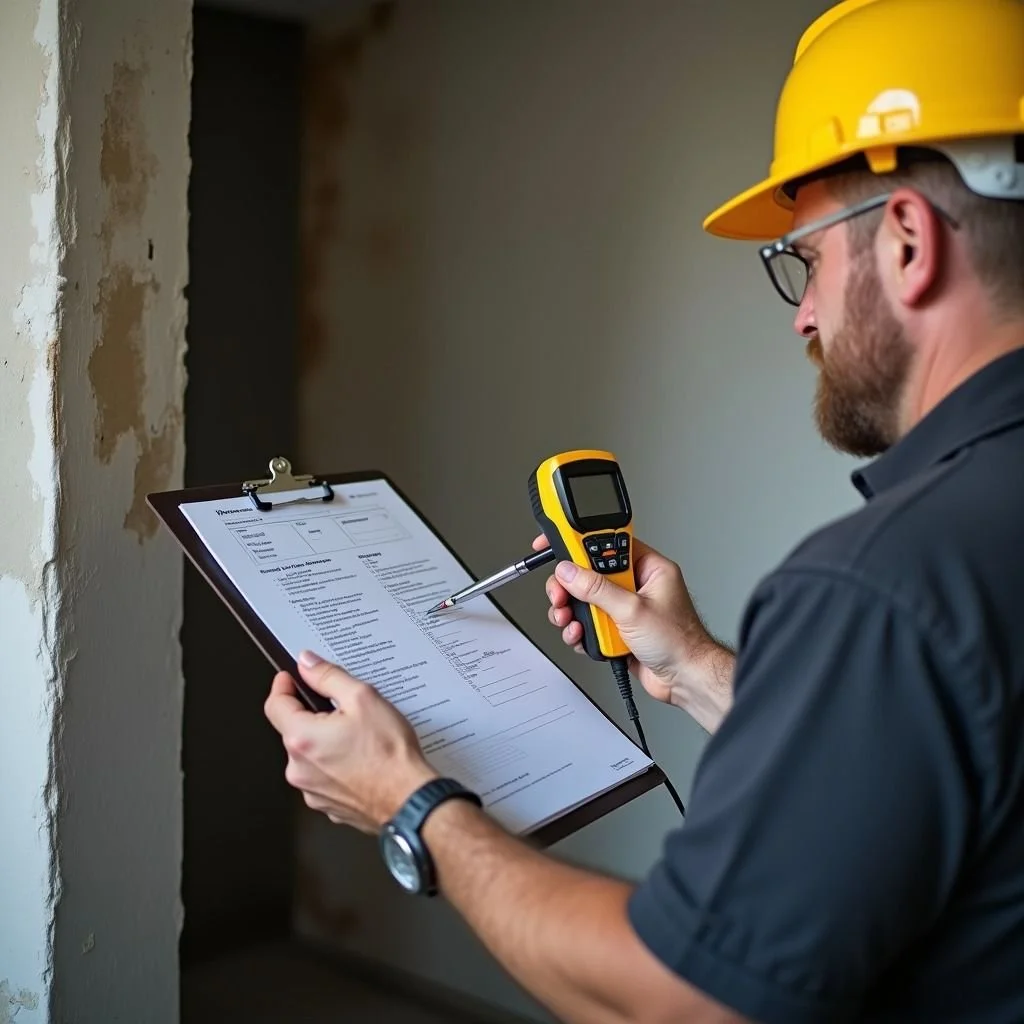
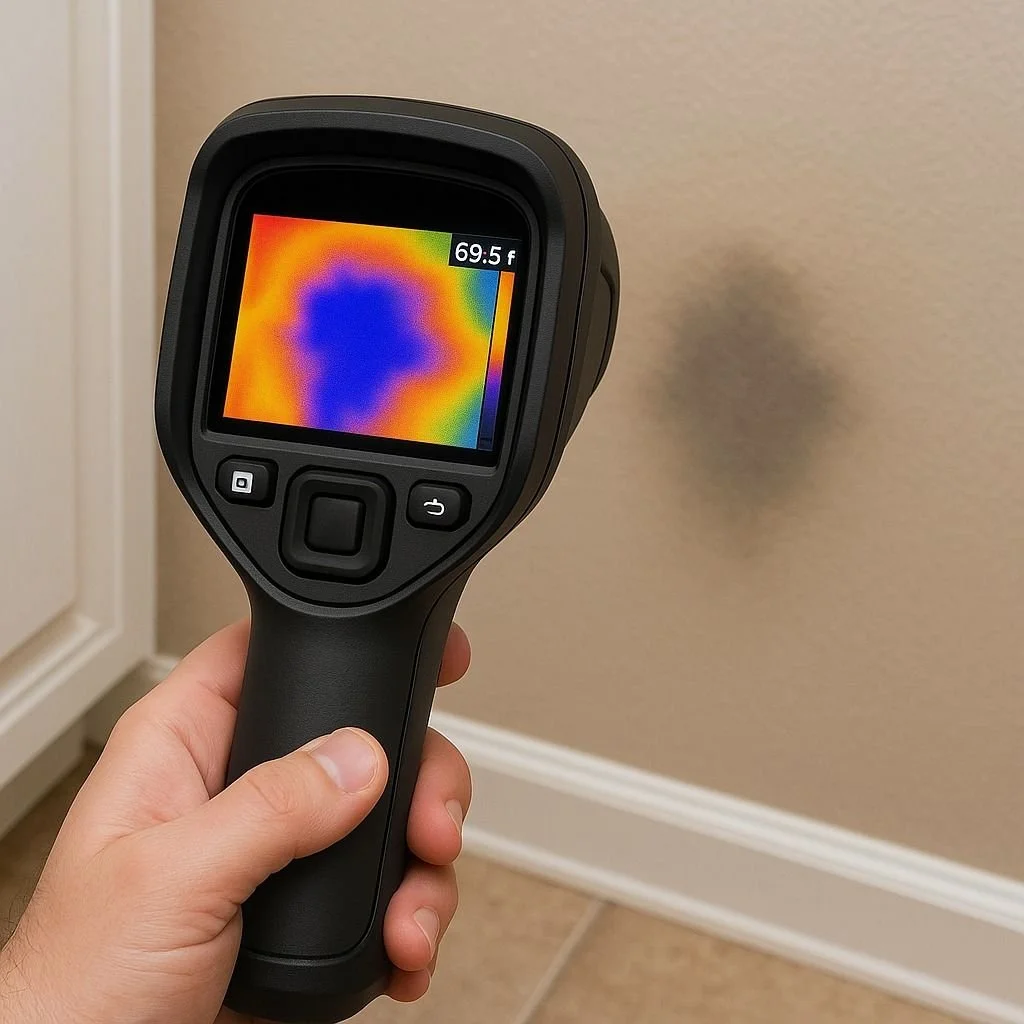
The first task is to record the building as it is, before anything changes. Defects get repaired, sites get altered, and conditions change with the weather, so early attendance matters. This stage involves systematic inspection and photographic recording, moisture readings, thermal imaging, controlled water testing, and where warranted opening up small sections to inspect what sits behind finishes.
It also involves gathering the documentary record: original drawings and specifications, approvals, construction records, product data and certifications, maintenance history, and any previous reports. Disputes are frequently decided on the gap between what the documents required and what was actually built.
A practical point often missed: if rectification is urgent for safety reasons, get the evidence recorded before the repair proceeds. Fixing a defect can destroy the proof of what caused it.
2. Establishing causation
This is the heart of forensic engineering and usually the contested centre of the dispute.
Causation means identifying the mechanism that produced the failure and excluding the alternatives. In building matters that is genuinely demanding, because failures are often multi-causal and because the party facing the claim will argue for a cause that shifts responsibility. Water ingress will be attributed to poor maintenance rather than defective waterproofing. Concrete deterioration will be attributed to age and coastal exposure rather than inadequate cover to the reinforcement.
A forensic engineer answers those arguments with evidence rather than assertion. Depth of cover can be measured. Carbonation depth and chloride content can be tested. Falls can be surveyed. Membrane detailing can be exposed and compared against the standard that applied when the building was constructed. Our guides to water ingress and concrete cancer describe the diagnostic methods involved.
The output is a reasoned conclusion on cause, with the alternatives considered and addressed rather than ignored.
3. Assessing scope and cost of rectification
Establishing liability is only half of a claim. The other half is quantum, meaning what it will cost to put the building right.
A forensic engineer specifies the rectification properly: what work is genuinely required to fix the defect and its consequences, rather than an aspirational upgrade or a patch that will fail again. That specification then supports a cost assessment, often prepared with a quantity surveyor. Overstated scopes get attacked in cross-examination and damage credibility on everything else in the report, so restraint here is a professional virtue rather than a weakness.
4. Reporting
The report is the deliverable that carries the case. A forensic report identifies each defect precisely, separates observed facts from opinion, states the standards or code provisions that applied at the relevant time and where the work departed from them, sets out the reasoning from evidence to conclusion so it can be followed and tested, addresses alternative explanations, and specifies rectification and its cost consequences.
Our guide to building defect reports covers the broader family of reports an owners corporation may need, including those prepared outside a dispute.
5. Giving evidence
If the matter proceeds, the engineer may confer with the other side's expert, participate in producing a joint report identifying what is agreed and what remains in dispute, and give oral evidence. Being cross-examined on a report is the point at which sloppy reasoning becomes expensive, which is why the earlier stages matter so much.
The rules that govern expert evidence in NSW
This is where forensic engineering becomes a legal discipline as much as a technical one, and it is worth owners and committees understanding, because it explains why a good expert sometimes says things the client does not want to hear.
Expert evidence in NSW civil proceedings is governed by Part 31 of the Uniform Civil Procedure Rules 2005 and by the Expert Witness Code of Conduct in Schedule 7 to those Rules. In NCAT, where most residential building disputes are heard, Procedural Direction 3 applies the same principles.
Four features of the Code matter most:
The expert's paramount duty is to the court, not to whoever is paying. The Code states plainly that an expert witness is not an advocate for a party, and that the duty to assist the court impartially overrides any duty to the party retaining them.
Compliance is a condition of admissibility. An expert must acknowledge in their report that they have read the Code and agree to be bound by it. Without that acknowledgment, the report and the oral evidence may not be received in evidence at all. A technically excellent report that omits it can be worthless.
Experts must work co-operatively with the other side's expert. Where directed, they must confer, try to reach agreement on the issues in dispute, and where they cannot agree, identify and clarify the actual basis of the disagreement rather than talking past each other.
The report must expose its reasoning. The Code sets requirements for content, and the underlying principle is that an opinion is only as good as the reasoning and evidence behind it. A conclusion asserted without a traceable path from evidence to opinion carries little weight.
The practical implication for a client is counterintuitive but important. An expert who tells you your case has a weakness is doing the job properly. An expert who tells you only what helps you is producing evidence that will not survive contact with the other side, and a tribunal that senses advocacy will discount the whole report.
Where these disputes are heard
Most residential building disputes in NSW are heard in NCAT, the Civil and Administrative Tribunal. Larger and more complex matters, including significant strata defect claims, may proceed in the District Court or Supreme Court. Insurance disputes may be resolved through the insurer's process, external dispute resolution, or litigation.
In building matters at NCAT, defects are commonly tabulated in a Scott Schedule, a document that lists each alleged defect alongside each party's position and the cost claimed. A well-prepared forensic report maps cleanly onto that structure, which is one practical reason to have the engineer and the lawyer working together early.
The disputes forensic engineers are engaged for
Building defect claims against builders and developers, including claims under the statutory warranties in the Home Building Act.
Duty of care claims under the Design and Building Practitioners Act, which reaches back roughly a decade and does not require a contract with the party at fault, as covered in our guide to the Design and Building Practitioners Act.
Insurance claims and causation disputes, where the question is whether damage arose from an insured event, from a defect, or from wear and maintenance.
Strata disputes, including disagreements over whether a defect affects common property or a lot, and therefore who must pay.
Cladding and fire safety matters, including whether material used was compliant when installed.
Contractual and payment disputes, where the quality or completeness of work is contested.
Structural failures and incidents, where the cause must be established for liability or safety reasons.
What makes a forensic report hold up
From experience, reports fail for predictable reasons. They assert a cause without demonstrating how the evidence supports it. They ignore the obvious alternative explanation, which the other side then raises. They apply today's standards to a building constructed under earlier requirements. They overstate the rectification scope, which undermines credibility on causation as well. They read as advocacy. Or they omit the Code of Conduct acknowledgment and are excluded before anyone reads the substance.
Reports that hold up do the opposite. They are evidence-led, transparent about limitations and about what could not be inspected, careful to apply the requirements that applied at the time, measured in scope, and written so that another engineer could follow the reasoning and reach the same conclusion.
When to engage a forensic engineer
Earlier is almost always better:
Before urgent repairs proceed, so the evidence of causation is preserved.
When a defect recurs after repair, since that pattern often indicates the original cause was never addressed.
Before a warranty or limitation period closes, so the position is documented while a claim remains available.
When responsibility is contested, whether with a builder, a developer, an insurer, or between an owners corporation and a lot owner.
When a claim is being prepared, so the technical evidence and the legal strategy are built together rather than retrofitted.
When the other side has served an expert report, so its methodology and conclusions can be properly reviewed.
The most common mistake is engaging a forensic engineer late, after repairs have altered the evidence and after decisions have been made that narrow the options.
Frequently asked questions
What is a forensic engineer? A forensic engineer investigates why a building or structure failed and documents the findings to a standard suitable for legal proceedings. The work centres on establishing causation from evidence, and on producing reports and evidence that can withstand scrutiny in a tribunal or court.
What is the difference between a forensic engineer and an expert witness? Forensic engineering is the investigative discipline. Expert witness is the role that engineer performs when giving evidence in proceedings. A forensic engineer acting as an expert witness in NSW is bound by the Expert Witness Code of Conduct in Schedule 7 of the Uniform Civil Procedure Rules, and in NCAT by Procedural Direction 3.
Is the expert working for me if I am paying them? Not in the way clients sometimes expect. The Code of Conduct provides that an expert witness is not an advocate for a party and has a paramount duty to assist the court impartially, overriding any duty to the party retaining them. That independence is precisely what makes their evidence valuable.
Can an expert report be rejected? Yes. An expert must acknowledge that they have read the Code of Conduct and agree to be bound by it, and without that the report and oral evidence may not be received. Reports can also be given little weight where the reasoning is not exposed, where alternatives are not addressed, or where the report reads as advocacy.
Do I need a forensic engineer or just a building consultant? If you simply need a defect fixed, a building consultant or remedial engineer is enough. If responsibility is contested, a claim is contemplated, or an insurer is involved, you need the investigation conducted and documented to an evidentiary standard from the outset, because a report prepared without that discipline is difficult to retrofit later.
When should I engage one? As early as possible, and ideally before rectification work alters the evidence. Early engagement also allows the technical investigation and the legal strategy to be developed together, which produces a stronger and usually cheaper case.
Get the technical evidence right from the start
Building disputes turn on causation, and causation is established by evidence gathered carefully and reasoned transparently. The cost of getting that wrong is rarely just a weak report. It is a claim that fails, or a settlement well below what the rectification actually costs, after the evidence that would have proved the case has been repaired away.
Assentra is a registered design practitioner in Civil, Structural, Facade and Waterproofing, with directors whose experience spans building consulting, engineering and expert witness work. We investigate what failed and why, document it to a standard that withstands scrutiny, and specify the rectification it will genuinely take to put right. Learn more about our expert witness services or get in touch to discuss a dispute.