
How to Choose a Remedial Engineering Consultant in Sydney
Most owners corporations go looking for a remedial engineering consultant at the worst possible moment. Something has already failed, an owner is complaining, water is coming through a ceiling, and the committee needs to act. In that situation it is tempting to get three quotes, pick the middle one, and hope.
The problem is that consultants are not interchangeable, and the choice you make here determines almost everything that follows. A consultant who correctly diagnoses the cause and writes a clear scope of works will save your scheme more money than any discount on their fee. A consultant who lists symptoms and hands you a vague report will cost you the fee, the wasted repair, and then the real repair.
This guide sets out what actually separates one consultant from another in Sydney, what to check before you engage anyone, and the questions that will tell you quickly whether you are talking to the right firm.
First, work out what you actually need
Before comparing firms, be clear about the kind of professional the problem calls for, because the titles overlap confusingly.
A building consultant inspects, diagnoses and reports on building problems and condition. A remedial engineer specialises in why existing buildings deteriorate and designs the repairs. A structural engineer is primarily concerned with whether a structure can safely carry its loads, which is a different question. Most deteriorating building problems in strata, leaks, cracking concrete, failing balconies and facades, are remedial problems rather than structural design problems, and we cover that distinction in detail in our guide to remedial versus structural engineers.
Being clear about this matters because engaging a design-focused structural engineer for a durability problem gets you a technically correct answer to the wrong question. You still will not know why the balcony leaks.
The non-negotiable: check their registration
This is the first filter, and it is the one most committees skip.
Under the NSW Design and Building Practitioners Act, designs for regulated building work must be prepared by a registered design practitioner, and registration is granted in specific classes. The classes that matter for most building problems are Civil, Structural, Facade and Waterproofing.
Two things make this practically important:
The regime covers repairs, not just new buildings. For apartment buildings, it applies to alterations and to the repair, renovation and protective treatment of the building. So remedial work on your building is regulated work, and the design for it needs an appropriately registered practitioner.
The class has to match the work. A practitioner registered for structural work is not thereby able to declare a facade or waterproofing design. If you engage someone without the right class and the work turns out to be regulated, you may have to start again with someone who can declare it. That is wasted money and lost months, and it usually surfaces when the scheme is finally ready to proceed.
Registration is publicly verifiable. Ask for the details, and check the classes cover what your building needs. Our guide to the Design and Building Practitioners Act explains the wider framework.
Independence: are they selling you the repair?
This is the single most useful question in this guide, and it is rarely asked.
Some firms diagnose the problem and also carry out the remediation. Others diagnose, specify and supervise, but do not perform the works. The difference matters because a consultant who profits from the repair has an interest in the repair being larger.
An independent consultant has no incentive to overscope. Their recommendation is based on what the building needs, and because they are not bidding for the construction work, they can run a competitive tender on your behalf and hold the contractor to the specification. For an owners corporation spending members' money, that separation is worth a great deal.
It also matters if the matter ever becomes contentious. A report from a firm that stands to win the resulting contract carries less weight with an insurer, a tribunal or the other side's lawyers than one from an independent practice.
Will they diagnose the cause, or just describe the symptom?
This is what separates a useful consultant from an expensive one, and it is easy to test.
Water travels. The stain on a ceiling is almost never below the point where water is entering. Concrete cancer is caused by moisture reaching reinforcement, which means the concrete repair is only half the job. A report that says "water damage observed to unit 12 ceiling, recommend investigation" has told you nothing you did not already know.
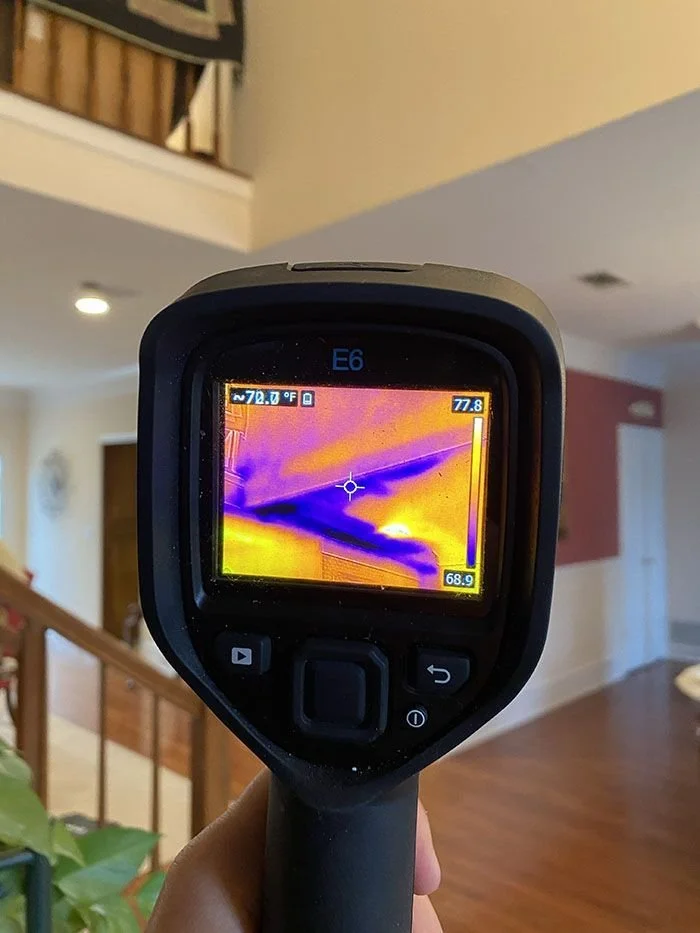
What you want is a consultant who works out the cause and can prove it, using moisture mapping, thermal imaging, controlled water testing, and where necessary opening up small sections to inspect membranes and detailing directly. Our guides to water ingress and concrete cancer describe what proper diagnosis involves.
Ask directly: will you identify the cause, or only assess what we have already noticed? The answer is revealing.
Sydney-specific experience
Local experience is not a marketing line in this field, for two reasons.
The coastal environment is harsher. Sydney's marine air drives chloride-induced corrosion in reinforced concrete far faster than an inland climate. Buildings near the coast and the harbour deteriorate differently, and a consultant who works on this stock every week recognises patterns a generalist will miss.
The building stock and the rules are local. Much of Sydney's apartment stock was built in identifiable waves, each with its own recurring defects. And the regulatory environment is specifically NSW: the Design and Building Practitioners Act, the Strata Schemes Management Act, the Home Building Act warranties, the building bond scheme for newer strata buildings, and the state's cladding obligations. A consultant who works in this system daily will handle your compliance and claim questions correctly.
Ask what proportion of their work is Sydney strata, and whether they have dealt with buildings like yours.

Can they take it from diagnosis through to design?
Many consultants will inspect and report. Fewer can also design the remediation and produce the documentation needed to tender and build it.
This matters because handing off between firms costs time and money and creates gaps. The firm that diagnosed the problem understands it best, and if they cannot design the repair you will pay someone else to learn it from scratch. Where the problem has a structural dimension, for example concrete cancer advanced enough to affect load capacity, you also want in-house structural capability rather than another referral.
Ask whether they can carry the job from investigation through to a specification you can tender, and whether they have structural capability in-house if it turns out to be needed.
What you should be getting for your money
Before you compare fees, make sure you are comparing the same deliverable. A report worth paying for identifies each defect precisely and locates it, diagnoses the cause with supporting evidence, records photographic and test evidence, references the Australian Standards or National Construction Code provisions where something does not comply, rates severity and priority so you know what is urgent, and recommends rectification in enough detail to budget and tender the work.
A report that lists observations without causes, evidence or priorities is not a cheaper version of that. It is a different and much less useful product. Our guide to building defect reports sets out what a thorough report contains.
How fees work, and why the cheapest quote is rarely the cheapest outcome
Consultant fees are usually either a fixed fee for a defined scope, an hourly or daily rate for investigative work where the extent is unknown, or a percentage of construction value for full project management of remedial works.
Fixed fees are easier for a committee to approve, but only work when the scope is genuinely defined. For an unknown problem, a staged approach often makes sense: a fixed fee for the initial investigation and report, then a separate engagement for design and documentation once everyone knows what is involved.
When quotes differ widely, the reason is almost always scope rather than value. One firm has priced a close-range inspection with access equipment and diagnostic testing; another has priced a visual walk-through from ground level. Both are legitimate services. Only one will tell you why your balcony leaks. Before comparing prices, make sure each quote covers the same access, the same testing, and the same deliverable.
The most expensive outcome in remedial work is a cheap investigation that leads to the wrong repair. You pay for the investigation, the failed repair, and then the correct repair.
Red flags
Be cautious of a consultant who:
Cannot tell you their registration classes, or is not registered for the work.
Will also be tendering for the remediation they are recommending.
Provides a report with no diagnosis of cause and no supporting evidence.
Quotes to fix the problem before investigating what is causing it.
Proposes only a ground-level visual inspection for a problem on a high facade or balcony.
Cannot produce a specification you could put out to tender.
Will not put a scope in writing, or is vague about what the fee covers.
Pressures the committee toward an immediate decision on a non-urgent matter.
A note for strata committees
Two practical points for owners corporations specifically.
Get the decision documented properly. Engaging a consultant and approving remedial works involves the committee and, depending on the scheme and the amounts, the owners. Your strata managing agent will guide the process, but a clear scope and a clear deliverable make approval far easier to obtain.
Think about the plan, not just the problem. A consultant assessing one defect is often well placed to tell you about the building's broader condition, which feeds directly into your ten year capital works plan. That is usually a better use of the same site visit, and it is covered in our guide to capital works funds.
Frequently asked questions
What does a remedial engineering consultant do? They investigate why an existing building is deteriorating, diagnose the cause, and design durable repairs. Typical work includes water ingress and waterproofing failures, concrete cancer and spalling, facade and balcony defects, defect reports, and specifying and supervising remedial works.
How do I know if a building consultant in Sydney is qualified? Check whether they are a registered design practitioner under the NSW Design and Building Practitioners Act and which classes they hold, such as Civil, Structural, Facade and Waterproofing. Registration requires qualifications, experience and insurance, and it is publicly verifiable. Confirm the classes match the work your building needs.
Should the consultant also do the repair work? Not usually, if you want impartial advice. A consultant who does not profit from the remediation has no incentive to overscope it, can tender the work competitively on your behalf, and can hold the contractor to the specification. Independence also strengthens the report if the matter becomes a claim or dispute.
Why do consultants' quotes vary so much? Almost always because the scope differs rather than the value. Close-range inspection with access equipment and diagnostic testing costs more than a visual walk-through from ground level, and produces a far more useful result. Compare access, testing and deliverables before comparing prices.
Who pays for a building consultant in a strata scheme? Where the problem affects common property, which covers the structure, external walls, facade and usually the waterproofing, the owners corporation generally pays, funded through the administrative or capital works fund depending on the nature of the work. For newer buildings, costs may be recoverable from the builder or developer.
How long does an inspection and report take? It depends on the building's size and the scope, from a focused report on a single defect to a full condition assessment. A consultant should give you a clear timeframe once the scope is agreed, and urgent safety matters can usually be prioritised.
Talk to a registered practitioner before you commit to anything
The consultant you choose shapes every decision that follows: whether the cause is correctly identified, whether the repair works the first time, whether you can compare quotes fairly, and whether you have evidence if the matter becomes a claim. It is worth a few careful questions before you engage anyone.
Assentra is a Sydney-based building consultancy and remedial engineering practice, registered as design practitioners in Civil, Structural, Facade and Waterproofing. We diagnose the cause, document it to a standard that supports a claim, and design compliant remedial work, and we are independent of the contractors who carry out the repairs. Learn more about our services or get in touch to discuss your building, and we will tell you honestly what your problem actually needs.