
Concrete Cancer Repair: How It Is Properly Done
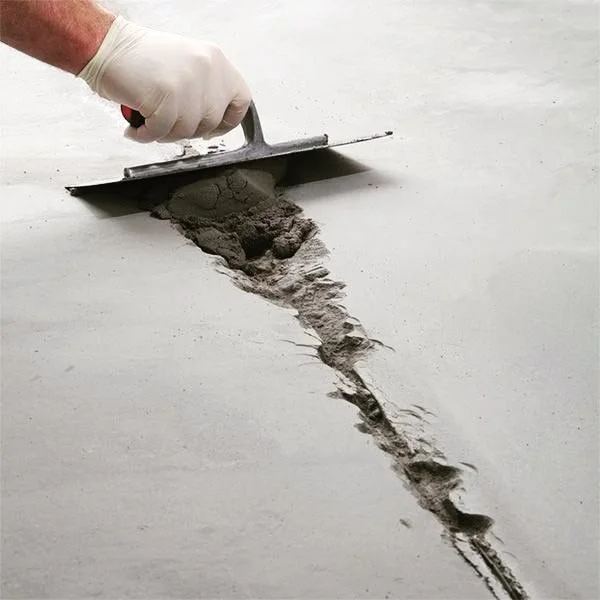
Most people meet concrete cancer repair as a quote. A contractor attends, looks at the spalled area, and offers a price to cut it out and make it good. The number seems reasonable, the work takes a few days, and the balcony looks new again.
Two or three years later, fresh cracking appears in a ring around the repair.
That outcome is so common it has a name in the industry, and it is not bad luck. It is the predictable result of treating concrete cancer as a patching job when it is a corrosion problem. The concrete is the symptom. The steel inside it is the patient.
This guide explains how a concrete cancer repair is properly carried out: what happens at each stage, why each stage exists, and the specific technical reasons that repairs fail. If you want to know what the work costs rather than how it is done, that is covered separately in our guide to concrete cancer and what repairs actually cost.
The principle that governs everything
Concrete cancer is the corrosion of steel reinforcement inside concrete. Fresh concrete is highly alkaline, and that alkalinity holds a microscopic passive layer around the steel that prevents it rusting. Corrosion begins when something destroys that protection, usually carbon dioxide neutralising the concrete over decades, or chloride from salt air reaching the bar.
Rusting steel expands to several times its original volume. Trapped inside concrete, that expansion cracks the concrete from within, then delaminates it, then breaks it away.
Everything that follows comes from one fact: the damage you can see was caused by a process happening where you cannot see it. Replacing the broken concrete without addressing the steel and the conditions around it fixes the appearance and leaves the mechanism running.
A correct repair therefore has to do four things, in order. Establish why the steel is corroding. Remove every part of the concrete that is no longer protecting it. Treat the steel itself. Reinstate the section with material that will hold, and stop the conditions that started it.
Step one: diagnose before anything is broken out
The first stage of a repair involves no repair at all.
Carbonation and chloride attack are different mechanisms and they call for different responses. Carbonation advances as a front from the surface inward, so it is usually worst where concrete cover is thinnest. Chloride is absorbed and can sit at depth across an element that still looks perfectly sound, which means the damage is often far more extensive than the visible spalling suggests.
Establishing which one is at work takes testing. Carbonation depth is measured by spraying a freshly broken surface with phenolphthalein indicator, which stains alkaline concrete pink and leaves carbonated concrete colourless. Chloride content is measured from drilled dust samples taken at increasing depths, which produces a profile showing how far salt has penetrated and whether it has reached the bar. A cover meter survey maps how much concrete sits over the reinforcement, which usually explains why corrosion started where it did.
Two further things are established at this stage. Sounding the surface with a hammer identifies delaminated concrete that has not yet fallen away, which is almost always a larger area than the visible damage. And the moisture source is traced, because corrosion needs water and something is supplying it.
Diagnosis also confirms that corrosion is in fact the cause. Not all surface damage is concrete cancer, and the distinction decides the entire repair approach, as set out in our guide to concrete spalling versus concrete cancer.
This work sits within building diagnostics and materials testing, and skipping it is the single most expensive decision available in concrete repair. Without it, the scope is guesswork, the quotes are not comparable, and the repair method may be wrong for the mechanism.
Step two: breakout, and the rule most patch repairs break
Breakout means removing the damaged concrete. Two rules decide whether the repair will hold.
Break out beyond the damage, not up to it. The concrete that has already fallen away marks where the process finished, not where it ends. Sounding identifies the delaminated zone, and the breakout extends into genuinely sound material past it. A repair that stops at the edge of the visible damage leaves cracked, debonded concrete at the perimeter, and the repair fails at that joint.
Break out behind the bar, not just to it. This is the rule that separates an engineered repair from a cosmetic one. The reinforcement has to be fully exposed, with clearance behind it, so that the new material completely surrounds the steel. The usual specification is a clear gap of around 20 to 25 millimetres behind the bar.
The reason matters. If concrete is removed only to the front face of the reinforcement, the back of the bar remains embedded in the same carbonated or chloride-contaminated concrete that caused the problem. That part of the steel continues corroding under the new repair, invisibly, and the repair lifts off within a few years. The patch looked fine on the day. It was built on the problem.
Breakout is normally done with light percussive tools or, on larger and more sensitive work, hydrodemolition, which uses high pressure water to remove deteriorated concrete without damaging the reinforcement or micro-cracking the sound concrete around it.
Step three: treating the reinforcement
With the steel exposed, it is cleaned back to bright metal, usually by abrasive blasting. All corrosion product has to come off, including from the back and sides of the bar. Rust left in place continues to expand.
The engineer then assesses section loss. Corrosion eats the bar, and a bar that has lost a significant proportion of its cross-section no longer provides the tensile capacity the element was designed around. Where loss is material, supplementary reinforcement is installed and lapped into sound bar either side, so the element regains its design capacity. Where loss is minor, the existing bar is retained.
This is a structural judgement, not a trade decision, and it is the point at which concrete cancer repair stops being maintenance and becomes engineering. It is also why a practice that holds structural registration can carry the work through without pausing to bring someone else in, which we cover in our guide to remedial versus structural engineers.
Cleaned steel is commonly then given a protective coating, typically a zinc-rich or polymer-modified cementitious product, before reinstatement.
Step four: reinstating the section
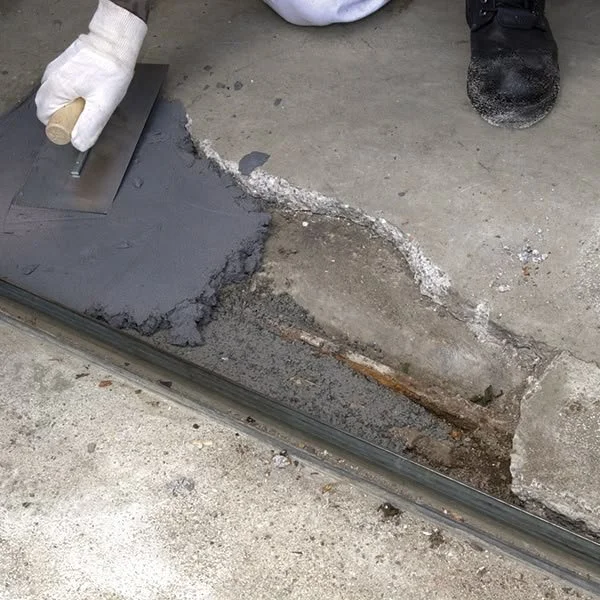
The removed concrete is replaced, and the material is chosen to suit the element rather than the convenience of the applicator.
Hand-applied polymer-modified repair mortars suit smaller patches and vertical or overhead work, built up in layers to a specified thickness.
Flowable micro-concrete is poured into formwork and suits larger or deeper sections where a hand-applied mortar would be impractical.
Sprayed concrete suits large areas and soffits, and places material at a rate hand application cannot match.
What matters more than the method is compatibility. The repair material has to behave like the concrete around it. If its elastic modulus differs too far from the parent concrete, the repair and the substrate carry load differently and the bond fails at the interface. If it shrinks as it cures, it pulls away from the edges and opens a path for water. This is the reason repair materials are specified by performance rather than picked off a shelf, and why Australian specifications commonly reference EN 1504, the European standard for concrete repair products and systems, alongside the Australian handbook SA HB 84, Guide to concrete repair and protection
The problem nobody warns owners about
Here is the part that explains the ring of new cracking that appears beside a completed repair.
When a patch is reinstated, the steel inside it is surrounded by fresh, highly alkaline material. That steel is repassivated and stops corroding. The steel immediately outside the repair is still sitting in the old carbonated or chloride-contaminated concrete, and it is still depassivated.
The two zones are electrically connected, because it is all one reinforcement cage. The newly protected steel becomes cathodic relative to the untreated steel around it, and that difference drives accelerated corrosion in a ring immediately outside the repair.
The repair did not fail. It caused the next failure.
This is known as the incipient anode effect, or the ring anode or halo effect, and it is the reason a building that has been patched repeatedly often has a patchwork of repairs each surrounded by newer damage. Every patch solved a local problem and created a perimeter one.
There are two established ways of dealing with it:
Galvanic anodes. Small sacrificial zinc units are embedded around the perimeter of the repair. Zinc is less noble than steel, so it corrodes preferentially and supplies current that keeps the surrounding reinforcement protected. They need no power supply and suit localised patch repairs, which is where the problem arises.
Impressed current cathodic protection. For extensive deterioration or high value assets, a powered system delivers controlled current to the entire reinforcement network, halting corrosion across the element rather than patch by patch. In Australia this is designed to AS 2832.5, Cathodic protection of metals, Part 5: Steel in concrete structures. It carries a higher upfront cost and requires ongoing monitoring, but on a badly chloride-affected building it can be cheaper over the asset's life than repeated breakout and reinstatement.
If a quote for concrete cancer repair makes no mention of what happens at the perimeter of the repair, that is worth asking about directly.
Protecting the repair, and stopping the cause
Two final stages determine whether the work lasts.
Surface protection slows the mechanism that caused the problem returning. Anti-carbonation coatings restrict carbon dioxide reaching the concrete, which addresses carbonation-driven corrosion. Hydrophobic impregnations, usually silane or siloxane based, penetrate the surface and repel water and dissolved chloride while still allowing the concrete to breathe, which matters in coastal exposure. Migrating corrosion inhibitors are sometimes specified as well, applied to the surface to penetrate through to the steel, though the evidence for their effectiveness on its own is mixed and they are better treated as a supplement than a solution.
Correcting the water source is the one that is skipped most often and matters most. Corrosion requires moisture. If a failed balcony membrane, a cracked facade joint, a blocked drainage outlet or a perished sealant is still admitting water into the element, the newly repaired concrete is on a timer.
This is why concrete repair and water ingress are so frequently the same investigation, and why a concrete repair scope that contains no waterproofing component should be questioned. The concrete work addresses the damage. The waterproofing addresses the cause.
What a proper repair specification contains
A defined specification is what allows an owners corporation to tender the work and compare prices on equal terms. It should set out:
The extent of breakout, with the delaminated area mapped rather than estimated
Breakout depth, including the requirement to expose behind the reinforcement
Surface preparation for both the concrete substrate and the steel
Criteria for supplementary reinforcement, including the section loss threshold triggering it
The reinstatement material, specified by performance
Treatment of the repair perimeter, including anodes where required
Protective coatings or impregnation
Associated waterproofing works
Testing and hold points, including what must be inspected before it is covered up
That last item is worth emphasising. Almost everything that determines whether a concrete repair lasts is invisible once the reinstatement material goes on. If nobody independent inspects the breakout and the prepared steel before it is covered, there is no way to know afterwards whether it was done correctly. Administering those hold points is part of project management on a remedial job.
Why concrete cancer repairs fail
Drawing the common threads together, repairs fail for a short and predictable list of reasons:
The cause was never diagnosed, so the mechanism continued
Breakout stopped at the visible damage instead of the sounded extent
Concrete was removed to the face of the bar but not behind it
Corrosion product was not fully removed from the steel
Section loss was not assessed, so a weakened element was reinstated as if sound
The repair material was incompatible with the parent concrete and debonded
Nothing was done at the repair perimeter, producing incipient anode corrosion
The water source was never corrected
Every one of these is a specification failure rather than a workmanship failure. The contractor usually did what was asked. The problem was what was asked.
When you need an engineer and not only a contractor
Not every concrete repair needs engineering input. A small, shallow, non-structural patch on an element with no corrosion and no water problem is a trade job.
Engineering input is warranted when:
Reinforcement is exposed and corroding, so section loss has to be assessed
The element is structural: a slab, beam, column, or a cantilevered balcony edge
Deterioration appears across multiple areas, suggesting a building-wide mechanism
The building is coastal, where chloride contamination is likely to extend past the visible damage
Repairs have previously been carried out and the damage has returned
The work needs to be tendered, which requires a defined scope
The cost may be recoverable through a defect claim, which requires the cause to be documented
For apartment buildings there is also a regulatory dimension. Remedial design work on class 2 buildings falls within the NSW Design and Building Practitioners Act, so the design has to be prepared by a practitioner registered in the relevant class.
Frequently asked questions
How is concrete cancer repaired? The damaged concrete is broken out past the delaminated area and behind the reinforcement, the steel is cleaned back to bright metal and supplemented where section loss is significant, the section is reinstated with a compatible repair material, the repair perimeter is protected against incipient anode corrosion, and the moisture source that caused the corrosion is corrected.
Can concrete cancer just be patched? No, and patching is the most common reason repairs fail. Patching replaces the concrete without treating the steel or the conditions causing corrosion, and it can accelerate deterioration in the ring around the patch through the incipient anode effect.
Why does new damage appear next to an old repair? This is the incipient anode effect. The steel inside a repair is repassivated by the fresh alkaline material, while the steel just outside it remains depassivated. The difference drives accelerated corrosion in a ring around the repair. It is prevented by installing galvanic anodes at the repair perimeter or by cathodic protection.
How deep does concrete need to be broken out? Past the delaminated area identified by sounding, and far enough to fully expose the reinforcement with clearance behind it, typically around 20 to 25 millimetres. If the back of the bar stays in contaminated concrete, it keeps corroding under the repair.
Does concrete cancer repair fix the problem permanently? It can, provided the corrosion mechanism is identified, the steel is properly treated, the repair perimeter is addressed, and the water or chloride source is corrected. If the cause is left in place, the repair is temporary regardless of how well the concrete work is executed.
Do I need waterproofing as part of a concrete repair? Usually yes. Moisture reaching the reinforcement is what causes most concrete cancer, so a repair scope with no waterproofing component generally leaves the cause unaddressed. A concrete repair quote that does not mention the water source is worth questioning.
Get the repair specified before you get it priced
Concrete cancer repair is unusual among building works in that the quality of the outcome is decided almost entirely before anyone picks up a tool, and becomes invisible the moment the reinstatement material goes on. The difference between a repair that lasts decades and one that returns in three years is not the contractor's hourly rate. It is whether the cause was diagnosed, the breakout was specified correctly, the steel was properly assessed, and the perimeter was dealt with.
Assentra is a registered design practitioner in Civil, Structural, Facade and Waterproofing. We diagnose why the reinforcement is corroding, specify the repair so it can be tendered and compared fairly, and administer the work so the critical stages are inspected before they are covered up. Learn more about our engineered solutions or get in touch to discuss your building.