
Building Cracks: Which Ones Matter and Which Ones Don't
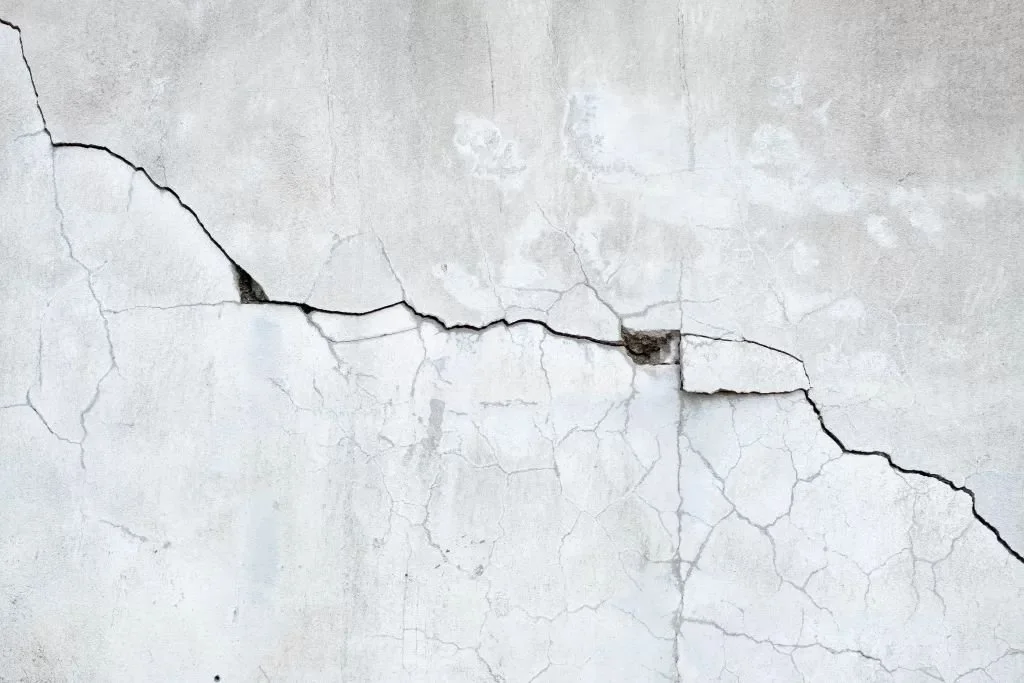
Every building cracks. Concrete shrinks as it cures, materials expand and contract with temperature, the ground moves, and structures flex under load. A building with no cracks at all is either very new or very unusual. So the question owners ask, is this crack a problem, is the right question, but the honest answer is that it depends on things most people do not know to look at.
Width matters, but width alone tells you very little. A one millimetre crack in the wrong place, running in the wrong direction, can be far more significant than a five millimetre crack in a render coat. What actually matters is the combination of where the crack is, what pattern it follows, whether it is moving, and what else is happening around it.
This guide explains how to read a crack, which patterns point to real problems, how cracking is formally classified in Australia, and when it is worth getting an engineer to look at it.
Why buildings crack in the first place
Most cracking comes from movement, and movement is normal. The common drivers are:
Shrinkage. Concrete and render shrink as they cure and dry. This produces fine, often random cracking in the first year or two of a building's life, and it is usually cosmetic.
Thermal movement. Materials expand in heat and contract in cold. A north or west facing facade in Sydney can swing through a large temperature range in a single day, and if the building has nowhere to accommodate that movement, it cracks instead.
Structural movement and settlement. Buildings settle after construction, and ground conditions change with moisture. Reactive clay soils swell when wet and shrink when dry, which moves footings unevenly. Trees close to a building draw moisture out of the soil on one side and can produce the same effect.
Deflection. Slabs and beams deflect under load. That is expected and designed for, but where a rigid wall or finish sits under a deflecting slab, the wall can crack.
Reinforcement corrosion. In concrete buildings, this is the one that matters most. When moisture reaches the steel inside concrete, the steel rusts, expands, and cracks the concrete from within. This is concrete cancer, and unlike the causes above it gets progressively worse.
Missing or failed movement joints. Buildings are designed with joints that let sections move independently. Where those joints were omitted, spaced too far apart, or have failed, the structure relieves the stress by cracking somewhere else.
The three things that tell you whether a crack matters
Rather than fixating on width alone, look at three things together.
1. The pattern
The direction and shape of a crack is often more informative than its size.
Fine, random, map-like cracking across a render or concrete surface usually indicates surface shrinkage. Generally cosmetic, though it can let water in.
Vertical cracks are common and often the least concerning, particularly where they appear at junctions between materials or near movement joints. Vertical cracking through masonry that widens toward the top or bottom is more significant, because that taper suggests rotation or differential movement.
Diagonal cracks, especially running from the corners of windows and doors, indicate that the wall is distorting. Openings are the weakest points in a wall, so movement shows up there first. A single diagonal crack over an old doorway may be nothing. Several, or one that is widening, warrants investigation.
Stepped or stair-step cracking in brickwork, following the mortar joints upward, is a classic sign of foundation or ground movement. The crack takes the path of least resistance through the mortar rather than through the bricks.
Horizontal cracking deserves more caution than most other patterns. In masonry it can indicate lateral pressure or wall tie failure. In concrete it is the pattern most associated with reinforcement corrosion, particularly where it follows a straight line at a consistent depth, which is the line of the steel below.
2. What is happening around the crack
Cracks rarely occur in isolation, and the surrounding evidence often identifies the cause:
Rust staining at or near the crack means the reinforcement is involved. Treat it as corrosion until proven otherwise.
Drummy or hollow-sounding concrete or render around the crack means the surface has delaminated and is ready to come away.
Water staining, efflorescence or damp at the crack means water is tracking through it, which accelerates whatever is happening inside.
Doors and windows sticking, or floors that have gone out of level, suggest the structure itself has moved rather than just the finish.
Cracks that line up on both faces of a wall, or on multiple storeys, indicate structural movement rather than surface cracking.
3. Whether it is changing
This is the single most useful thing an owner can establish, and it costs nothing.
A crack that appeared two years ago and has not changed since is behaving very differently from one that has widened over six months. Stable cracks are usually the result of movement that has already happened and finished. Active, progressing cracks mean something is still going on.
The practical method is simple. Photograph the crack with a ruler or coin beside it for scale, measure the width at a marked point, write the date on the photograph, and repeat every few months. If you want to be more precise, engineers use tell-tale gauges fixed across the crack that give a direct reading of movement over time. Bring that record to whoever assesses it, because a documented history is far more useful than a single observation.
How cracking is formally classified
Australia has a recognised framework for classifying crack damage, set out in AS 2870, the standard for residential slabs and footings. It classifies damage in categories from negligible upward, with cracks up to about one millimetre generally falling into the lowest categories and typically considered cosmetic.
Two points about it are worth understanding, because a lot of online advice gets them wrong.
Its scope is residential slabs and footings. AS 2870 is written for houses and low-rise residential construction on ground slabs and footings. Its damage categories are widely used as a general reference for masonry cracking, but a multi-storey reinforced concrete apartment building is a different structure governed by different standards, and applying the residential table to it without judgement is a mistake.
Width alone does not determine severity. The more useful distinction the framework draws is by consequence:
An appearance defect, where the only consequence is that the element looks impaired.
A serviceability defect, where the function of the element is impaired, for example a door or window that no longer operates properly, or water entering where it should not.
A structural defect, where the structural capacity of the element is affected.
That is the classification that matters in practice. A hairline crack admitting water into a concrete slab can be a serviceability problem heading toward a structural one, while a wider shrinkage crack in a render coat may be neither.
Cracking in apartment buildings specifically
Because most of Assentra's work is on strata and commercial buildings rather than houses, it is worth noting how cracking presents differently in multi-storey construction.
The most consequential pattern is cracking associated with reinforcement corrosion, typically on balcony edges and soffits, slab edges, columns and facade elements. It usually appears as cracking following a straight line, often with rust staining, and frequently with drummy concrete alongside. This is progressive and expensive, and it is covered in detail in our guides to concrete cancer and concrete spalling versus concrete cancer.
Facade cracking is also common, driven by thermal movement, inadequate or failed movement joints, and render that has debonded. It matters beyond appearance because cracks in a facade are entry points for water, which is how a cosmetic problem becomes a durability one. Our guide to water ingress explains how that progresses.
Cracking around windows and at floor junctions often reflects structural movement or deflection, and in older buildings can indicate wall tie deterioration in cavity construction.
When to get advice
Some cracking genuinely warrants a professional assessment rather than monitoring. Get advice if you see:
Any crack with rust staining, or with exposed reinforcement.
Horizontal cracking in concrete or masonry, particularly if it follows a consistent line.
Cracks that are visibly widening or that have changed measurably over months.
Cracking accompanied by drummy concrete or render, or by material falling from the building.
Cracks that appear on both faces of a wall, or repeat across multiple storeys or units.
Doors and windows binding, or floors going out of level, which suggests structural movement.
Cracking with water entering through it.
Any cracking on a balcony, soffit or facade element above a place people walk.
Cracking that appears suddenly, rather than gradually.
The last one is worth emphasising. Gradual cracking usually reflects gradual causes. Sudden cracking suggests a sudden change, and that deserves prompt attention.
How an engineer investigates cracking
Establishing the cause is what determines whether the repair is filling and painting or something considerably more involved. A proper investigation typically includes:
Mapping the cracking across the building to identify patterns, because the distribution usually reveals the cause more clearly than any single crack.
Measuring and monitoring, including crack width measurement and, where movement is suspected, monitoring over time to establish whether it is active.
Sounding the surrounding surface to identify delamination.
Cover meter and slab scanning using ground penetrating radar to locate the reinforcement and establish the depth of cover, which is often the reason corrosion began.
Materials testing, including carbonation depth and chloride content where corrosion is suspected, and render bond or pull-off testing where debonding is in question.
Reviewing the structure and the documentation, including original drawings, to understand where movement joints were meant to be and what the element was designed to do.
That work sits within our building diagnostics and materials testing service, and it produces an evidence-based conclusion about cause rather than an opinion about appearance.
A note for strata committees
In most schemes, the structure, external walls and facade are common property, which makes cracking in those elements an owners corporation responsibility even when it appears inside a lot. Cracking that shows up in several units in the same position is almost always a building-wide cause rather than a series of coincidences, and treating it unit by unit tends to cost more than investigating it once properly.
Two practical points. First, if cracking is documented and its cause identified, the likely remediation can be built into the ten year plan rather than arriving as a surprise, which is covered in our guide to capital works funds. Second, for newer buildings, cracking that traces back to construction may be recoverable through a defect claim, which is what a building defect report is for.
Frequently asked questions
When should I worry about a crack in a wall? Look at pattern, context and behaviour rather than width alone. Rust staining, horizontal cracking in concrete, drummy surrounding material, cracks visible on both faces of a wall, doors or windows binding, water entering, or any crack that is measurably widening all warrant a professional assessment. Fine random cracking with none of those features is usually cosmetic.
How wide does a crack have to be before it is serious? There is no single threshold. Under the AS 2870 framework for residential construction, cracks up to about one millimetre generally fall in the lowest damage categories and are usually cosmetic. But a narrow crack in the wrong place, such as one following the reinforcement in concrete with rust staining, can be far more significant than a wider shrinkage crack in render.
Are hairline cracks normal? Fine cracking from shrinkage and thermal movement is common and usually cosmetic, particularly in newer buildings and in render. It still matters if it lets water in, because water reaching reinforcement is how minor cracking becomes major deterioration.
What do stepped cracks in brickwork mean? Stepped or stair-step cracking following the mortar joints usually indicates ground or foundation movement, since the crack follows the weakest path through the mortar. It is worth assessing, especially if it is widening or accompanied by other signs of movement.
Do I need a structural engineer or a remedial engineer for cracking? It depends on the cause. If the question is whether the structure is compromised or has moved, that is structural. If the cracking is caused by deterioration such as reinforcement corrosion, that is remedial. Because the cause is usually unknown at the outset, a practice with both capabilities can diagnose it and design the repair without a handover, as explained in our guide to remedial versus structural engineers.
Can I just fill and paint over a crack? Only once you know what caused it. Filling an active crack means it will simply reopen, and filling a crack caused by corroding reinforcement conceals a problem that continues to worsen underneath. Cosmetic repair is the last step after the cause is understood, not the first response.
Find out what your cracking is actually telling you
Cracks are how a building communicates that something has moved, shrunk, corroded or been overloaded. Most of the time the message is unremarkable. Sometimes it is the earliest visible sign of a problem that becomes considerably more expensive if it is painted over rather than understood.
Assentra is a registered design practitioner in Civil, Structural, Facade and Waterproofing. We investigate cracking to establish its cause using crack mapping and monitoring, slab scanning, cover meter survey and materials testing, and we design the repair where one is needed. Learn more about our building diagnostics and materials testing or get in touch to discuss your building.